
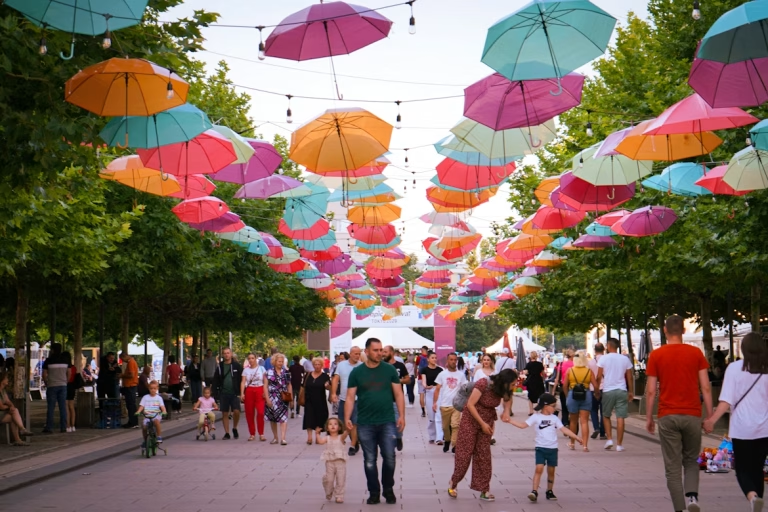
Kosovo’s complex history is reflected in its diverse linguistic landscape, where several languages are spoken by different ethnic communities, including Albanians, Serbs, Bosniaks, Turks, Roma, Ashkali, Egyptians, Gorani, and Croats. Albanian is spoken by the majority of the population (approximately 91 percent of the total population of 1,589,659), Serbian by about 4–6 percent, while other languages are spoken by smaller communities. In many countries, the presence of such small communities might be considered of limited political relevance. However, in Kosovo, linguistic issues, like the status and use of the Serbian language, carry significant political weight given the historical context, and are closely linked to interethnic relations. In such a linguistically diverse environment, effective interethnic communication and the implementation of language policies rely heavily on translation and interpreting services.Llegeix més »

 Els dies 9 i 17 d’octubre passats se celebrà a la Universitat de Lleida el seminari
  L’Escola d’Administració Pública de Catalunya (EAPC) publicarà aquest desembre el número 84 de la